
Centralized Business Decisioning Built Directly Into Salesforce
cmDecision gives Salesforce a dedicated decisioning engine that replaces scattered logic with one place to define, govern, and automate how your business makes judgments. It supports rules, scores, and AI models to deliver consistent, explainable outcomes across credit, approvals, and operations.
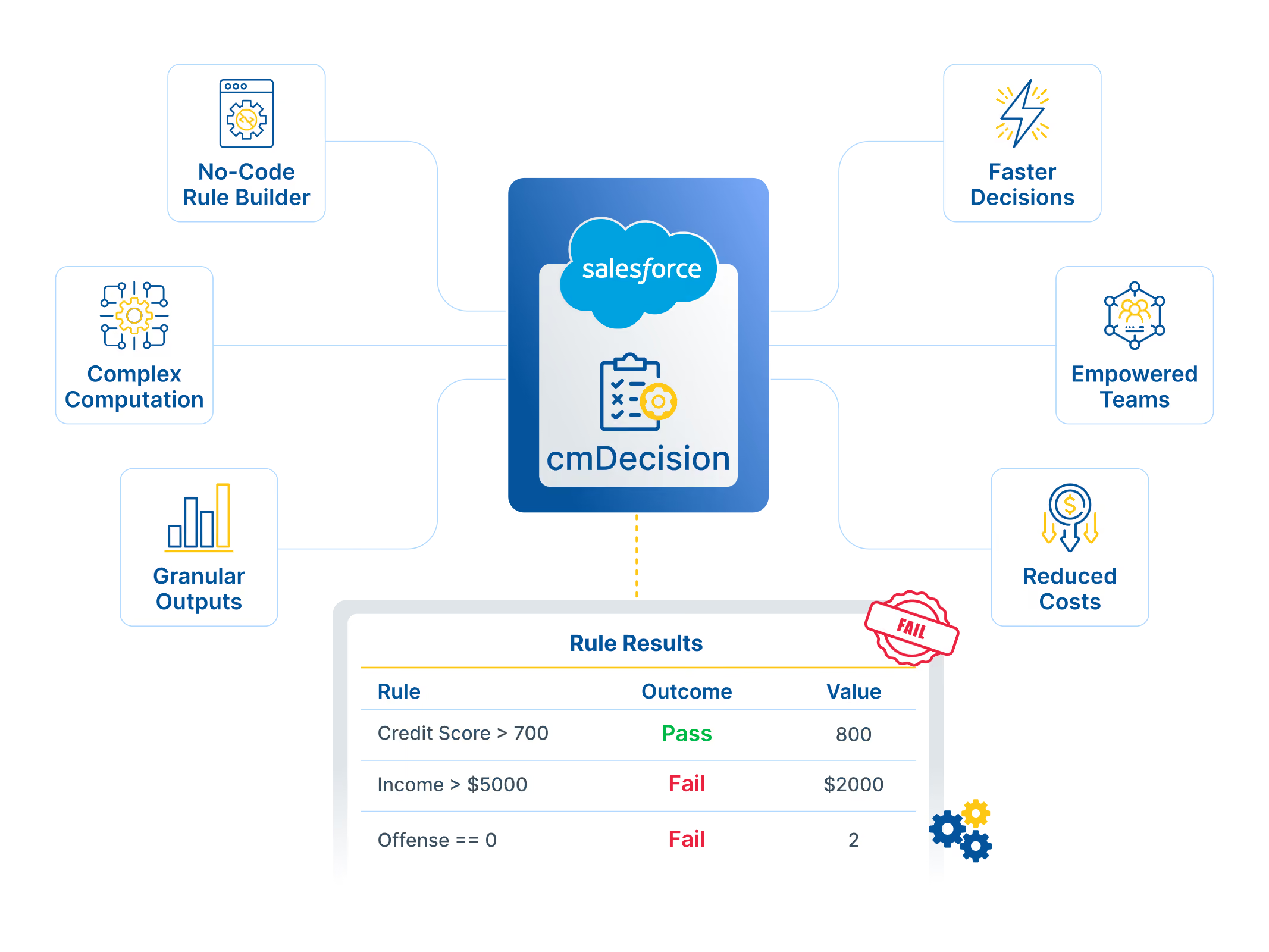
How cmDecision Automates Business Decisions

Decisions You Can Trust and Defend
Centralized rules and explainable logic remove guesswork, giving leadership confidence that every decision follows policy and stands up to audits.

Frictionless Customer Progression
Instant, consistent decisions remove delays in credit, onboarding, and approvals, keeping customers moving forward without bottlenecks that impact satisfaction or conversion.

Reliability That Prevents Process Breakdowns
cmDecision evaluates rules before automations run, reducing silent failures, misfires, and downstream corrections that interrupt operations or create unexpected customer issues.
The Decision Rule Engine Behind cmDecision

How cmDecision Serves Operations and Compliance Teams

Centralized Logic That Simplifies Complex Workflows
All rules live in one engine, making it easier to manage intricate approval, credit, or eligibility processes that previously spanned multiple tools.

Richer Decisions Through Multi-Object Evaluation
cmDecision can review data across related Salesforce objects at once, enabling nuanced decisions that reflect full customer or account context.

Actionable Insights Into Rule Performance
Built-in reporting shows which rules drive outcomes, helping teams refine logic over time and improve portfolio quality or operational decisions.

Rapid Policy Deployment Without IT Cycles
Teams adjust criteria using a point-and-click editor, accelerating rollout of updated policies, products, or eligibility requirements.

Seamless Integration With Existing Automation
The engine plugs into Flow, Apex, and Process Builder, allowing decisions to trigger updates, tasks, notifications, or escalations already in place.

Safe, Internal Processing for Sensitive Evaluations
All logic runs inside Salesforce, ensuring sensitive decision inputs like income, eligibility scores, credit factors, never leave your controlled environment.

Frequently Asked Questions
Can the Decision Rule Engine handle complex, multi-step credit or risk decisions without slowing down Salesforce?
Yes. The engine is designed for high-volume, multi-step decision logic and processes evaluations far more efficiently than trying to replicate the same logic in Flow or Apex. It is optimized to handle layered eligibility checks, multi-object lookups, cross-field comparisons, and scoring models without any noticeable impact on system performance. This makes it ideal for risk-heavy processes like lending, onboarding, or compliance reviews where speed and accuracy both matter.
How easy is it to audit or review the decisions the engine makes?
Every decision the engine produces is logged and traceable. This means users can see which rule triggered, what conditions were evaluated, and why a specific outcome was chosen.
For industries that require regulatory reporting or compliance documentation, these logs act as a built-in audit trail. It helps teams validate decisions, troubleshoot inconsistencies, and maintain transparency without digging through code or manually reconstructing steps.
Can the Decision Rule Engine adapt as my business rules change over time?
Absolutely. One of the biggest advantages of using a dedicated rule engine is flexibility. You can update rules, tweak weightings, add new criteria, or retire outdated logic without rewriting automation or deploying code changes. As business policies evolve, whether due to new regulations, pricing updates, or risk thresholds, the engine can adapt immediately, making it easier for teams to stay aligned with shifting requirements.
Is the engine useful even if we don’t have a credit or lending process?
Yes, many organizations use the engine outside of lending. It is effective anywhere you need consistent, repeatable decision logic such as account assignment, customer onboarding checks, discount approvals, service eligibility, legal/compliance validation, or automated workflow routing. If your team spends time interpreting rules or evaluating criteria repeatedly, the engine can standardize those decisions and reduce manual oversight.
How do we test new rules safely before activating them in production?
The Decision Rule Engine includes a built-in testing mode that lets users simulate decisions before pushing anything live. You can run real data through draft rules, compare outcomes, and confirm the logic behaves as expected. This prevents accidental overrides or incorrect approvals and gives operations teams confidence that changes won’t disrupt existing workflows. It is a simple, risk-free way to validate updates before they go into production.
Testimonials
Hear What 400+ Organizations Say About Cloud Maven, Inc
"Our company has used a handful of credit checking products before coming across Credit Checker, and this is by far the most efficient solution for us. It is user friendly, quick, and organizes the information better than we could have asked for. Their client support team takes any questions/issues very seriously and will quickly find a solution for you. We are looking forward to working with their team for many years to come!"
Brianna Maestre
Operations Manager, iAdvanceNow
"Instant and efficient patient verification. Eligibility Checker is definitely a gift to the health care domain. It instantly checks the eligibility of a patient. Insurance verification and managing patients has become much easier now. I highly recommend this app."

Vaishali Ghai
Salesforce Consultant, Accenture
"Cloud Maven, Inc is one of the absolute best partners I've ever worked with. They are smart, dedicated, innovative, and their software works at scale with great performance. They know Salesforce and custom development best practices. Very impressive, highly recommend!!!!"

Bill Hahn
Sr. Customer Success Architecture, Salesforce
"Great experience and product, Cloud Maven, Inc was a great partner during the entire process. Their support was attentive and helpful, the install was painless and the product works flawlessly. Thanks again Cloud Maven!"

Mike Patchen
Salesforce.com Consultant
"Cloud Maven, Inc is an outstanding business partner. Their collaborative approach with clients is a real strength. Cloud Maven, Inc and team do a terrific job of understanding business and client requirements and translating them into functional and practical applications. They are expert in Salesforce and Java and are a real asset for our team. They are a pleasure to work with."

Jim Byrne
MD, Intercontinental Exchange
"The team at Cloud Maven, Inc was extremely responsive during implementation of our very tight project timeframe. And they knew what we were talking about. When you’re developing on the Salesforce platform, you need a partner who knows both Salesforce and what you are trying to accomplish."

James Slocum
Chief Information Officer, OneUnited Bank
"I have been working with Cloud Maven and Team since 2018, we implemented their credit applications as well as used their onshore and offshore resources to complement our internal teams. We are very satisfied with the outcome of the projects that we did with them. The credit checker application saved us hundreds of hours of custom code to integrate credit bureaus into Salesforce."

Sabetay Palatchi
President, Constructive Finance
"We’ve recently been able to implement the Credit Checker and this is a great feature. It has cut our credit processing time down by probably 75 percent. Cloud Maven has been extremely professional to work with. They’re quick on their responses, very insightful and have walked us through the process. I highly recommend using them."
Ashley Morin
Underwriting Manager, 7-Eleven
"Our biggest challenge prior to getting credit checker was that we simply didn’t have a program in place to be able to run credit, which is a huge decision factor in our industry. With the credit checker, we were able to put a lot of customizations in place so that we can automatically run credit when certain information is in our system. This takes away a lot of manual labor from our processing team and we’re able to work more efficiently."
Lauren Falsetti
Director, Better Rise Capital
"Great solution for us. We can now do all of our credit checks, keep all our information inside of Salesforce. It was a great experience. We got it customized and built to our needs and the tech support is fantastic. We’re very pleased with Cloud Maven. They were able to build a solution for us and the support is fantastic. They’re very responsive and they find a solution for what you need."

Paul Scheller
IT Director, Burch Oil Co
"The secure email allows us to track every single step of the email process. So we are able to keep track of who’s doing what and what’s being accomplished for ease instead of people having to manually keep track of things. Just knowing that everything is securely and safely being sent as a healthcare organization gives us all a peace of mind."

Sara Hildreth
Development Coordinator, Everyday Miracles
"Prior to lending manager, our challenge was to improve productivity with our submissions and sales team. This product makes the process and submitting applications more streamlined. Our sales productivity has increased and the time it takes to submit has been a lot quicker. Our overall satisfaction with Cloud Maven is a 5/5 especially with the quick response time during implementation from their team."

Steven Nagy
Solutions Consultant, Moby Capital