
The way lending works today is quite different compared to a couple of years ago. Borrowers today expect fast approvals, clear communication, and simple and user-friendly digital interfaces across each point of interaction. Lenders, on the other hand, have been faced with increasing regulations, competition, and the need to scale their business while also managing complexity.
Choosing the right loan management software (LMS) has become much less about technology and more about strategic planning. Because so many LMS vendors offer similar functionality, there seems to be confusion as to which system will meet your needs.
This blog post helps you identify the key features of modern loan management software, compare options, and make decisions when selecting an LMS for your organization.
Why Loan Management Software Matters More Than Ever in 2026
In recent years, lending has moved toward digital first models and by 2026 this model will no longer be optional. Many financial institutions are now processing large numbers of applications, growing into new types of lending, and competing against fintech organizations that operate at lightning speed. As a result, the supporting systems for lending operations have become crucial in determining how quickly a company can grow.
According to research, the global fintech lending market was worth approximately $589.6 billion in the prior year, illustrating the exponential growth rate of digital lending. Additionally, as lending continues to migrate online, relying upon multiple disparate or manual processes to complete tasks is unsustainable.
Moreover, borrower preferences have evolved in ways that impact every aspect of the operational workflows. The majority prefers digital lending experiences due to faster response times and improved visibility. In fact, 68% of borrowers prefer digital lending platforms based on these two criteria. As such, lenders face even greater pressure to deliver consistent experience through the entirety of the lending cycle from application to repayment.
This is where loan management software fits into the picture. It connects the disparate elements of the lending process into a single structured process that reduces delays and errors associated with disconnected tool usage. Moreover, a loan management software enables lenders to respond to evolving requirements without compromising either regulatory compliance or customer satisfaction.
What is Loan Management Software And What It Actually Does
Loan Management Software essentially manages the whole loan-making process, including origination and servicing. If a lender wants to issue a loan, this software helps them do so by providing the necessary operational functions.
Managing the entire loan lifecycle
The primary role is to provide support to lenders through the entirety of the loan cycle, from the first interaction with a borrower to final repayment. This includes:
- Origination - collects and verifies applicant information, conducts credit checks and determines loan eligibility.
- Underwriting - reviews an applicants' creditworthiness and making credit decisions
- Disbursement - issues funds to borrowers once the loan is approved
- Servicing - tracks payments and handles communication with borrowers
- Collections - initiates processes to recover funds owed to the lender
- Reporting - generates reports, audit logs, and compliance documents
When these stages integrate into one system, lenders gain better visibility into their overall portfolio and experience less inefficiency that often comes with switching tools used.
Key Features of Loan Management Software You Should Expect in 2026
Loan management systems vary greatly. Some provide everything lenders require, but many systems are inflexible, unintelligent, and unable to scale.
Some of the critical functions required for efficient and scalable lending operations by 2026 will be those that have evolved from "desired" to "required."
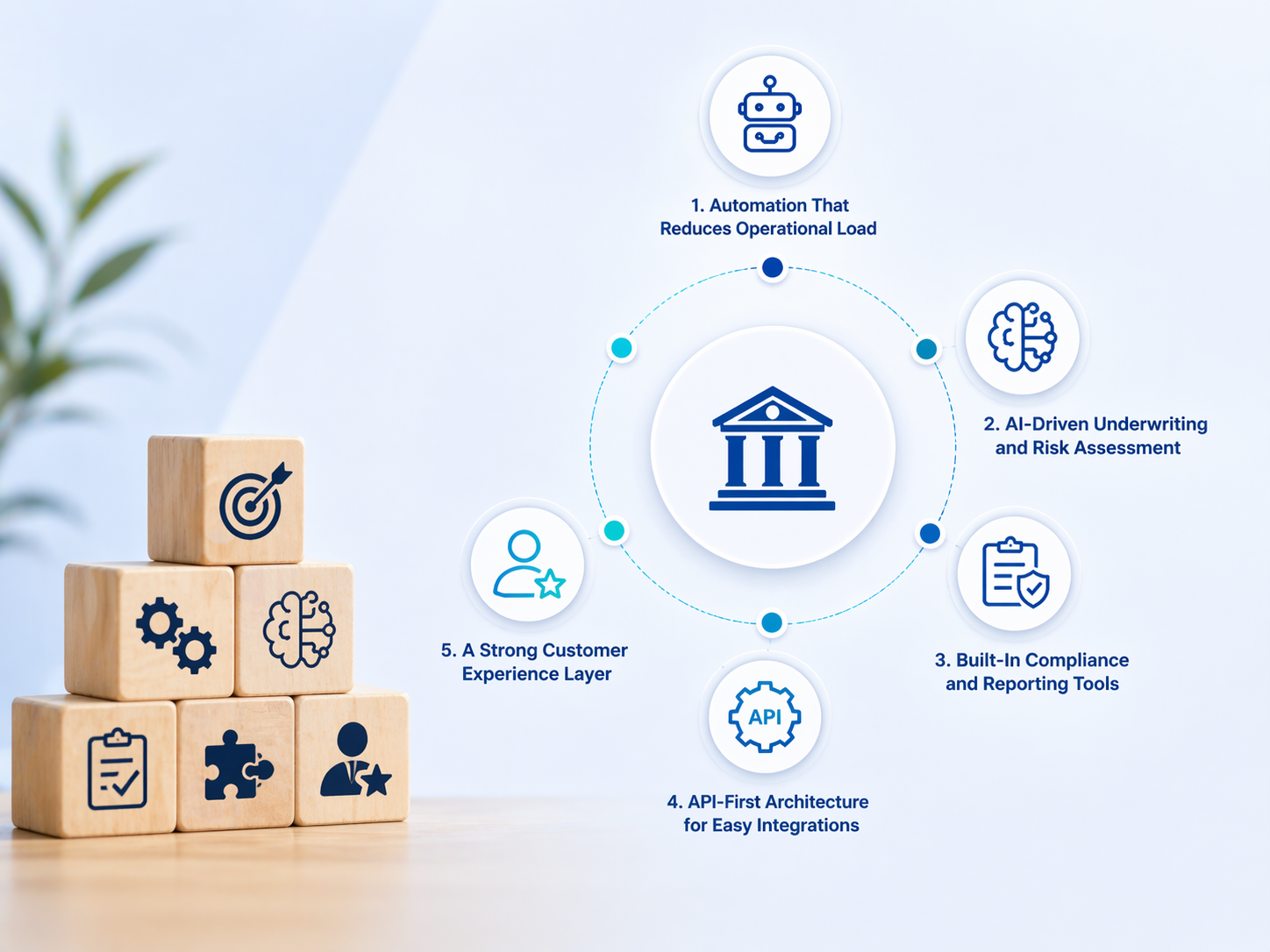
Automation That Reduces Operational Load
Manual workflows significantly delay the speed at which loans are approved, increase the probability of making errors during the loan process, and create dependency within teams. Modern Loan Management Software is expected to automate repetitive tasks like:
- Document verification
- Data entry
- Payment tracking
- Status updates
This not only speeds up the approval process for loans but also enables staff members to devote more time to high value decision-making instead of low-level processing.
AI-Driven Underwriting and Risk Assessment
Many modern loan management systems use AI driven models to evaluate borrowers based on their past behaviors, transactions histories, and alternate forms of credit data to better assess the level of risk associated with lending to them.
With the right loan management system, lenders make quick decisions regarding loan request while maintaining control over risk exposure, especially as loan volumes increase.
Built-In Compliance and Reporting Tools
Compliance regulations are continually evolving. And, ensuring ongoing compliance is much more involved than simply conducting an occasional check. The ideal system should assist lenders in establishing an audit trail, producing reports in real-time and automating compliance workflows.
A well-designed Loan Management Software will meet all regulatory compliance requirements while minimizing additional administrative burdens on internal teams.
API-First Architecture for Easy Integrations
Most lending ecosystems are comprised of multiple interconnected parties. Whether it is integration with third-party providers offering know your customer (KYC) services, payment processors or credit agencies, integrating with existing partners is a large component of everyday lending operations.
API-first architecture allows for easy integration with any number of existing systems, making it easier to expand capabilities without rebuilding infrastructure each time.
A Strong Customer Experience Layer
Each point at which a borrower interacts with your platform influences how they perceive your service.
Today's best-in-class Loan Management Software products have user-friendly interfaces that lend transparency and simplicity throughout each step. This way, you minimize drop-off rates during onboarding and foster long-term loyalty and engagement.
How to Evaluate Loan Management Software Vendors Without Getting Overwhelmed
After reviewing a couple of demos, most of these platforms start to resemble each other. However, once you take a closer look at how well the platform fits into your operational processes, and how easy it is to expand as your needs grow, the differences tend to emerge.
Focusing on a few distinct areas can help lend clarity to evaluating Loan Management Software.
Scalability
The best loan management system considers the potential growth of your lending activity.
Can it manage an increase in loan applications, users, and products without having to add significant additional functionality or performance limitations?
Integration Capabilities
You need to integrate your lending systems with third-party tools. A good loan management software provides strong integration capabilities, allowing you to embed lending system into your existing ecosystem.
User Experience
Both lenders' staff and borrowers must experience ease-of-use. Lenders may lose productivity if their staff struggle to understand and utilize a complex system. Besides, borrowers may abandon the application process if the user interface is too cumbersome.
Compliance Readiness
Loan management software should support regulatory compliance inside the system, not to be handled externally. Compliance readiness reduces lender exposure and improves reliability in providing reports.
Total Cost of Ownership
The pricing goes beyond the initial licensing fee. Total cost of ownership also includes implementation, customization, and ongoing maintenance costs. So, it is essential to compare the TCO before making a decision.
Trends Shaping Loan Management Software in 2026
Loan management software technology is rapidly advancing, and the expectations have been changing at the same pace. What was acceptable several years ago is often considered dated today as lenders seek faster credit decisions, greater insight into the lending operation and more flexibility in delivering lending solutions.
Below are a few key trends driving the design and adoption of newer platforms:
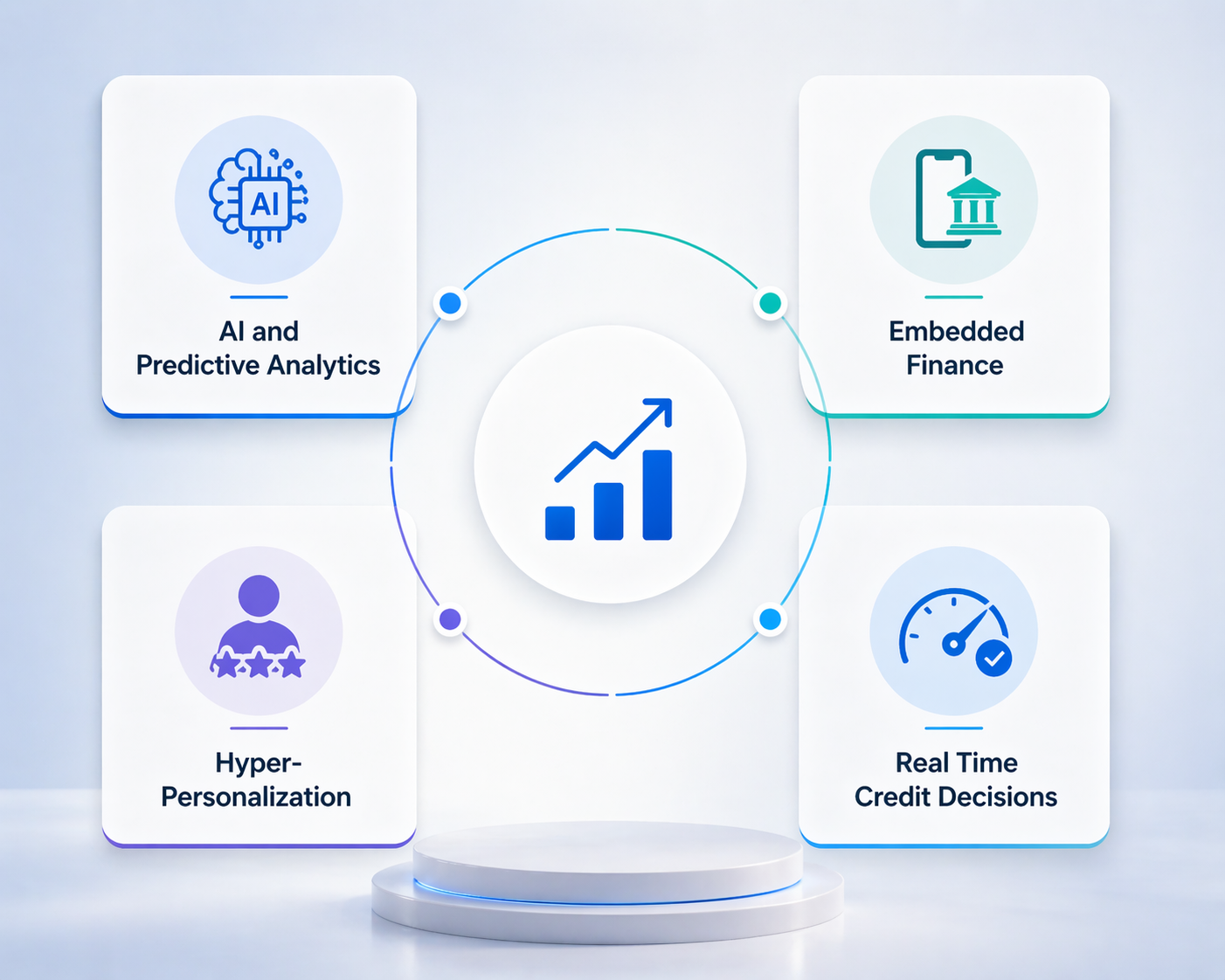
AI and Predictive Analytics
Artificial Intelligence is becoming one of the fundamental layers within modern loan management software, primarily in underwriting and portfolio monitoring. Instead of relying solely on historical data or fixed rules, lenders can leverage predictive models to assess risk, identify patterns, and make better decisions based upon new data entering the model.
Embedded Finance
With lending no longer being limited to traditional financial institutions, it is now being integrated into e-commerce sites, marketplaces, platforms and digital ecosystems where consumers spend the majority of their online time.
As a result, lenders require loan management software that supports flexible partnerships and integrations, enabling them to extend lending capabilities through other products and experiences.
Hyper-Personalization
Rather than providing generic products, consumers want loan offers that fit their individual characteristics and profile. For example: customized repayment options, personalized terms, or communications specific to their behavior and preferences.
By using real-time data and analytics, modern Loan Management System allows lenders to hyper-personalize offers to consumers throughout their entire lifecycle.
Real Time Credit Decisions
Speed has emerged as one of the defining elements of lending experiences. Consumers expect fast approval times and timely updates on the status of their loan application.
So, loan management software is designed to make credit decisions in real-time, process high volumes of data, and remain compliant with applicable regulations.
How to Choose the Right Loan Management Software for Your Business
While reviewing any loan management software, ask yourself the following questions:
- Does it support your current loan products and allow you to expand into new ones?
- Is it capable of handling increasing loan volumes or customers without slowing down your business operations?
- Does it support seamless integration with other tools and partners you currently use?
- Can it significantly reduce manual effort required for key business workflows?
- Is it flexible enough to adapt to regulatory or market changes?
If you find that a potential platform does not have clear answers to these questions, it can limit the growth as your business evolves.
Features, although significant, are only one of the factors to consider while selecting an LMS. More importantly, you need to know if the system fits into your lending strategy.
The right loan management software should:
- Align with how your teams perform their jobs
- Support the level of borrower experience that you want to deliver
- Allow your business to scale without having to constantly re-configure or customize
By viewing your selection criteria in this manner, it will likely be easier for you to identify a loan management software that will not only meet your short-term needs but also provide long-term stability for your organization.
Why Modern Lending Teams Are Moving to Unified Platforms
In the past, most lending organizations used separate systems for each phase of the lending process: origination, servicing, reporting and collections. This may initially fulfill the needs of a lending organization; however, it generally produces inefficiencies that include:
- Gaps in data due to lack of integration among various components
- Slower processes resulting in longer cycle times
- Increased dependence on manual coordination among teams
As lending volume increases, these inefficiencies grow and eventually begin to negatively impact both the speed of decision making and the operational velocity of the lending organization.
That’s why, many lending organizations are now beginning to explore the possibility of a unified loan management software. Cloud Maven, Inc’s cmLending offers a singular platform for managing every aspect of the lending process from loan application to loan repayment.
A unified loan management software platform brings loan origination, syndication, loan servicing, collection, and reporting within a single umbrella. It provides consistency throughout the lending process and ensures that data continually flows across all phases of the loan lifecycle.
Some of the benefits include:
- Improved insight into loan performance
- Reduced manual effort and low error rates
- Faster processing times throughout the loan life cycle
- Consistent customer experience during the borrowing process
Final Thoughts: Buying Smart in 2026
Identifying the best loan management software is based upon two factors: how you operate today and how you envision your lending business development in the future.
The platform you choose needs to address your immediate problems, but it should also be capable of evolving along with your lending business as you develop new loan products and improve customer experience. As lending continues to become more digital and competitive, choosing the right system will impact how quickly and efficiently you grow.
cmLending is one such modern solution that was built around these changes. It offers an integrated origination, servicing, collection, and reporting platform that enables lenders to reduce operational complexities and obtain a single source of truth for all aspects of the loan lifecycle.
An integrated approach enables lenders to operate faster, make better decisions, and deliver consistent borrower experiences without needing multiple separate systems.
To understand how cmLending can assist your lending operations, get in touch with our experts for a personalized demo.