The lending environment has undergone significant changes due to increased adoption of digital solutions, changing customer behavior, and growing regulatory complexity. With an increasing number of lenders moving forward with digital transformations, many remain confused about the differences between loan servicing software and loan management software.
Although both types of software have some similarities as well as shared objectives throughout the entire loan lifecycle, there are also many distinctions. As a lender, you need to understand the different functions each type of software offers.
If you want an efficient scalable model that produces lower levels of operational friction and creates improved customer experiences, this guide is for you.
Why Understanding Loan Software Categories Matters in 2026
The lending ecosystem is evolving rapidly toward fully automated, highly integrated platforms. According to Grand View Research, the total size of the global digital lending platform market was approximately $13.47 Billion in 2025 and is expected to increase at a CAGR rate of 27.7% through 2030. This growth highlights the need for lenders to select the right lending technologies to remain competitive within the marketplace.
At the same time, the regulatory rules governing lenders continue to become more complex while borrowers' expectations regarding quick approvals and quality service continue to rise. When lenders rely on separate systems to manage loan origination, servicing, and management activities, this leads to data fragmentation, processing delays, and higher costs.
Those who recognize the fundamental differences between loan management software and loan servicing software can make more informed choices and move toward comprehensive lending ecosystems.
What Is Loan Management Software?
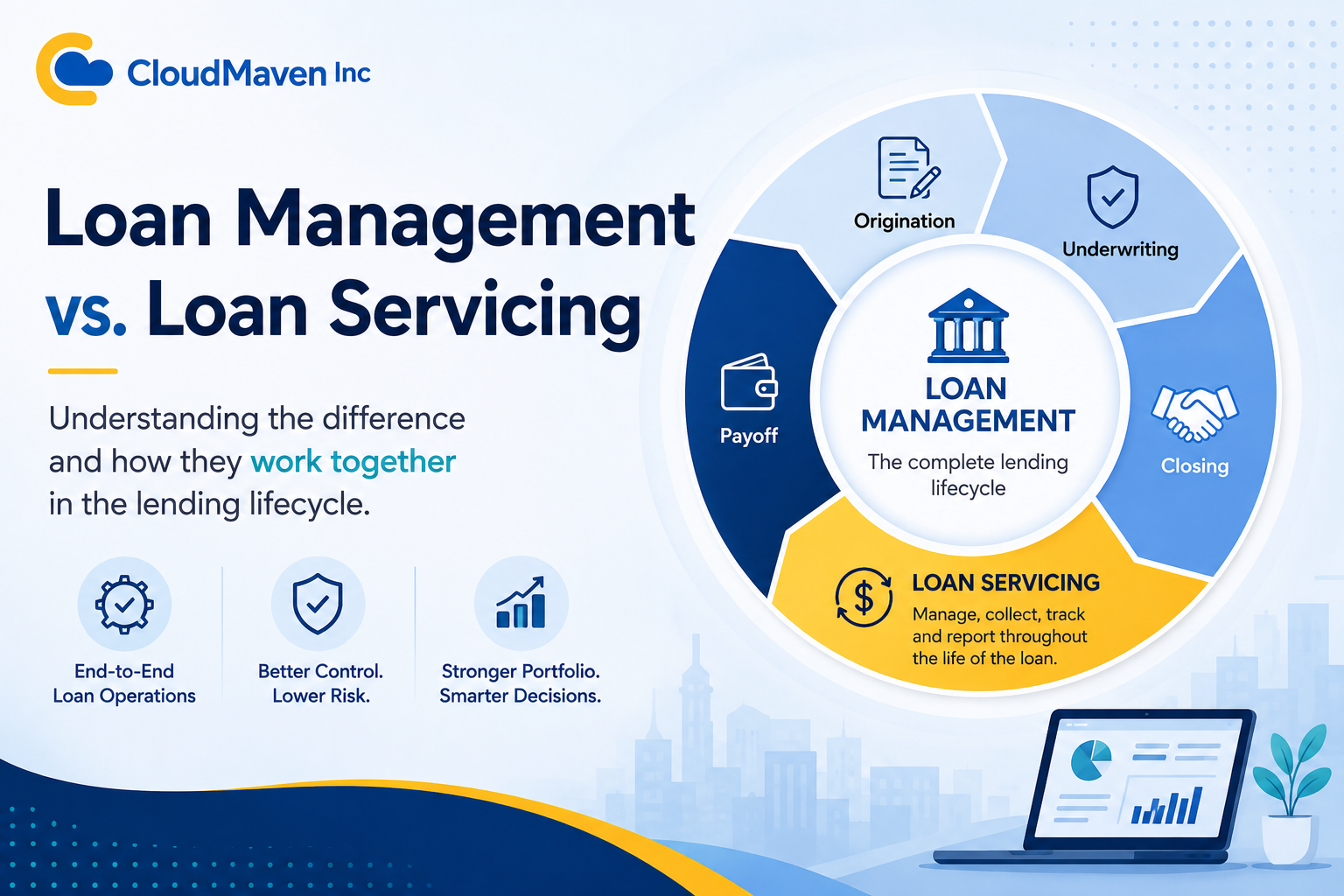
Loan management software is a system designed for lenders to oversee all aspects of the loan lifecycle, right from borrower application through repayment. It operates as a central hub connecting various lending activities to create a single workflow.
Rather than focusing on one stage, loan management software creates visibility and control throughout the lending process.
Features of Loan Management Software
Typical features include:
- Loan origination workflows to handle applications and approvals
- Tools for underwriting and credit decisioning
- Functionality for collecting and managing documents
- Compliance tracking and audit trails
- Dashboards for monitoring portfolios and reporting
Who Uses Loan Management Software Most Often?
In general, mid-sized to larger lending institutions are most likely to utilize loan management software. This software is also adopted by financial services companies that manage numerous types of loan portfolios.
As well, organizations desiring to expand their operations, but do not want to increase staffing levels find loan management software particularly appealing because it helps them to coordinate the efforts of multiple teams and associated workflows while ensuring they comply with all regulatory requirements.
What is Loan Servicing Software?
Once a loan has been approved and funded, loan servicing software addresses every aspect of post-disbursement phase of loan lifecycle. These include repayment activity, borrower communication, and ongoing account maintenance.
In essence, this is the point at which lenders generate revenue and build long-term relationships with borrowers.
Characteristics of Loan Servicing Software
Typical characteristics found in loan servicing software include:
- Automated payment processing and scheduling
- Interest calculation and amortization tracking
- Escrow management and tax accounting
- Borrower communications and/or self-service portals
- Delinquency tracking and collections management
As servicing complexity increases, these capabilities become even more important.
Difference Between Loan Management and Loan Servicing Software
These two types of systems are different from each other in terms of their overall functionality, users, and the type of business that is impacted.
Where Does Loan Origination Software Fit In?
The Loan origination software plays a foundational role in the lending process. It begins the process by taking the borrower’s information from their application, evaluating their credit worthiness and sending the file through their approval workflow.
A loan origination system that can either be a stand-alone solution or one of the modules within a larger loan management system.
For lenders looking to improve efficiency at early lending stages, solutions such as Cloud Maven, Inc's Loan Origination software help automate approvals, reduce turnaround times, and improve borrower onboarding.
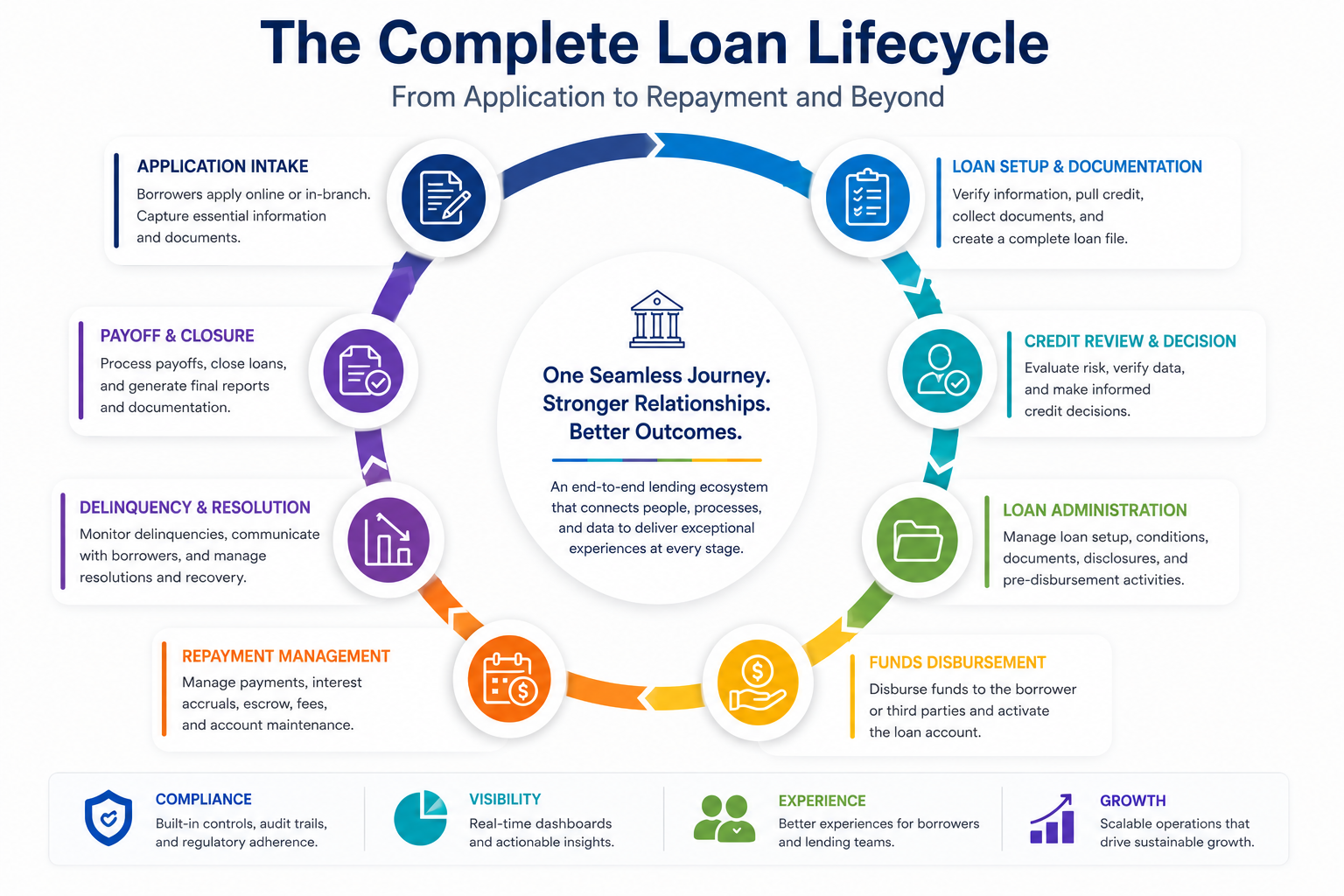
When paired with Servicing, the system provides a continuous process for managing loans from the moment they get originated until they are paid off.
How Modern Lenders are Using Integrated Systems
There are significant efficiencies when you use multiple systems for loan origination, servicing and management. Data needs to be transferred from one system to another, which increases the likelihood of errors and delays.
According to Fannie Mae’s 2025 Lender Sentiment Survey, only 22% of lenders today are using eNotes, even though nearly every lender expects to use them in the future. This gap highlights how many lenders continue to operate using partially digitized or non-integrated systems.
Advantages of One System for Your Entire Lending Business
Using one system for your entire business has many advantages:
- A single "source of truth" for your loan data
- An improved borrower experience from origination through servicing
- Faster processing and decision making
- Simplified compliance and reporting
As lenders move forward to grow and compete with others, having an integrated system is becoming more attractive.
How cmLending Combines Loan Management and Loan Servicing Software
Cloud Maven, Inc cmLending is designed to combine all of the components of a lending process including origination, loan management and servicing in one complete solution.
End-to-End Loan Lifecycle Support
From the moment a borrower applies for a loan, cmLlending combines the origination, loan management and servicing process into a single, seamless flow. No additional separate applications are needed to manage each step of the lending cycle.
Built for Scalability and Compliance
The cmLending platform has been designed to support lenders as they grow by incorporating regulatory compliance tools, automated workflows, and configurable processes that adapt to different lending models.
Complete Data Flow Within Your Organization
In addition, this platform ensures that your data flows smoothly between teams, enhancing transparency and minimizing manual interventions.
How to Choose Between Loan Management and Loan Servicing Software
Selecting the appropriate loan management or loan servicing system will depend upon your organization's present requirements as well as its expectations regarding growth.
Questions to Consider When Selecting the Appropriate System
- What segment(s) of the loan life cycle need the most improvement?
- Are your current business systems integrated or fragmented?
- Do you anticipate a rapid expansion in your lending activities over the next few years?
When You Will Require Both
Many lenders who continue to grow their businesses require both loan management and servicing solutions. Rather than acquiring two distinct systems (one for each capability), it is beneficial to utilize a single application platform that integrates all functions.
A Successful Approach to Your Lending Technology Strategy
Lenders use loan management applications and loan servicing software in order to support the lending process in very different yet complimentary ways. The former provides oversight to the lending process from origination through post-closing; whereas the latter supports efficient repayment processes that meet regulatory compliance standards.
The real advantage comes when you stop treating them as separate entities and start thinking in terms of a complete lending ecosystem.
This is where cmLending helps you reduce complexity, improve efficiency, and deliver a better experience for both internal teams and borrowers.
As the lending industry continues to evolve, adopting an integrated solution is becoming a strategic necessity for long-term growth.